FLIGHT DECK SYSTEMS · AVIATION TECHNOLOGY
Who Is Really Flying When Autopilot Is On?
Explore how modern aircraft maintain their course, altitude, and flight path—and why pilots remain essential even when automation is controlling the airplane.
During a long commercial flight, passengers may imagine that the pilots spend hours manually holding the aircraft on course.
In reality, modern airplanes often use autopilot systems for substantial portions of a flight.
These systems can maintain altitude, follow selected headings, track navigation routes, and manage certain phases of flight.
Some advanced aircraft can even perform automatic landings under specific conditions.
However, autopilot does not turn an airplane into a completely independent machine.
Pilots remain responsible for managing the flight, monitoring aircraft systems, communicating with air traffic control, and responding to changing conditions.
Autopilot is a flight-control tool that follows selected instructions. It does not replace the judgment and responsibility of trained pilots.
Understanding how autopilot works reveals the relationship between sensors, computers, flight controls, and the people operating the aircraft.
What Is an Aircraft Autopilot?
An autopilot is a system that automatically controls certain aspects of an aircraft’s flight.
Instead of requiring continuous manual control inputs, the system uses information from aircraft sensors and navigation equipment to maintain selected flight conditions.
For example, a pilot may select a particular altitude.
The autopilot then makes appropriate control adjustments to maintain that altitude within the aircraft’s operating capabilities.
Similarly, a pilot may select a heading or engage a mode that follows a planned navigation route.
The autopilot responds by controlling the aircraft according to the selected mode.
The available functions vary considerably between aircraft.
A small general aviation airplane may have a relatively simple autopilot.
A modern commercial airliner may use an integrated automatic flight-control system with many operating modes.
The Basic Principle: Measure, Compare, and Correct
Autopilot operates through a process called feedback control.
The system measures what the aircraft is doing.
It compares that information with the selected flight target.
If there is a difference, it commands an appropriate correction.
Consider an aircraft maintaining a selected altitude.
If the airplane begins drifting below that altitude, the autopilot detects the change.
It may command a pitch adjustment to correct the flight path.
As the aircraft approaches the selected altitude, the system reduces or modifies its correction.
This continuous process helps maintain stable flight.
However, the actual control logic is more sophisticated than simply reacting to altitude differences.
Modern systems also consider aircraft attitude, vertical speed, airspeed, and other relevant parameters.
FLIGHT CONTROL LOOP / SIMPLIFIED PROCESS
Sensors report aircraft attitude, altitude, speed, and motion.
The computer compares current conditions with the selected target.
The system commands suitable flight-control adjustments.
New measurements show whether further corrections are needed.
Which Aircraft Controls Does Autopilot Operate?
Aircraft move around three principal rotational axes.
These movements are known as pitch, roll, and yaw.
Autopilot systems use appropriate control surfaces to influence the aircraft’s motion.
Pitch: Controlling the Nose-Up or Nose-Down Motion
Pitch describes rotation around the aircraft’s lateral axis.
Elevators or other pitch-control surfaces help adjust the aircraft’s nose attitude.
Autopilot uses pitch control to support functions such as altitude holding, vertical-speed control, and certain climb or descent modes.
Roll: Controlling Bank Angle
Roll describes rotation around the aircraft’s longitudinal axis.
Ailerons and, on some aircraft, spoilers help control roll.
Autopilot uses roll control to maintain wings-level flight, follow a heading, or turn along a navigation route.
Yaw: Controlling Left and Right Nose Movement
Yaw describes rotation around the aircraft’s vertical axis.
The rudder controls yaw.
Many aircraft also use a yaw damper to reduce unwanted yawing motion.
The yaw damper may operate as a related but distinct function from the main autopilot.
Exact control arrangements depend on the aircraft design.
What Sensors Does Autopilot Use?
An autopilot cannot control an aircraft effectively without accurate information about its motion and flight conditions.
Depending on the aircraft, relevant information may come from several systems.
Attitude and heading reference systems provide information about aircraft orientation.
Air data systems supply measurements such as airspeed and altitude.
Inertial reference systems can provide motion and orientation information.
Navigation equipment supplies information needed to follow selected courses or routes.
Radio navigation receivers may also support approach guidance.
Some systems use satellite navigation information as part of their navigation functions.
Modern aircraft often include redundancy so that certain failures do not immediately remove all flight-control capability.
However, inaccurate or conflicting sensor information can still create serious challenges.
That is why pilots monitor aircraft indications and system behavior throughout the flight.
How Autopilot Maintains Altitude
Altitude hold is one of the most familiar autopilot functions.
When the appropriate mode is engaged, the system attempts to maintain a selected altitude.
If the aircraft begins climbing or descending away from that target, the autopilot makes corrections through the flight controls.
However, maintaining altitude does not necessarily mean maintaining a constant airspeed.
Engine thrust, drag, atmospheric conditions, and aircraft configuration also influence performance.
If the aircraft encounters changing winds or turbulence, the autopilot may make repeated adjustments.
In some conditions, the system may reach an operating limit or become unable to maintain the selected target.
Pilots must recognize such situations and respond appropriately.
How Autopilot Follows a Heading or Flight Route
Autopilot can control the aircraft’s lateral flight path in several ways.
In heading mode, the system turns the airplane toward a selected heading and then attempts to maintain it.
In navigation modes, it may follow guidance from a flight management system or other navigation source.
The aircraft’s flight management system can contain a planned route consisting of waypoints and procedures.
When the appropriate guidance mode is active, the autopilot can follow that route by making controlled turns.
However, the flight management system and autopilot are not the same thing.
The flight management system helps calculate and organize navigation guidance.
The autopilot controls the aircraft according to the active flight guidance commands.
Pilots must verify that the correct modes and navigation sources are selected.
| Autopilot Function | What It Controls | Typical Use |
|---|---|---|
| Heading Hold / Select | Lateral direction | Following an assigned heading |
| Altitude Hold | Vertical flight path | Maintaining a selected altitude |
| Vertical Speed | Climb or descent rate | Controlled climbs and descents |
| Navigation Tracking | Lateral route guidance | Following a planned course |
| Approach Guidance | Selected approach path | Supporting instrument approaches |
Autopilot vs. Autothrottle: What Is the Difference?
Autopilot and autothrottle are related but distinct systems.
Autopilot primarily controls the aircraft’s flight path through the flight controls.
Autothrottle or autothrust systems manage engine thrust according to selected targets and operating modes.
For example, an autothrottle system may adjust thrust to help maintain a selected airspeed.
Meanwhile, the autopilot may control pitch to maintain altitude.
The systems can work together, but their responsibilities differ.
Not every aircraft equipped with autopilot also has autothrottle.
In aircraft without automatic thrust control, pilots may need to adjust engine power manually while the autopilot manages selected flight-control functions.
FLIGHT DECK DISTINCTION
Autopilot Controls the Flight Path. Autothrottle Controls Engine Thrust.
Depending on the aircraft and selected modes, the two systems may coordinate to manage altitude, speed, and navigation efficiently.
Can Autopilot Take Off an Airplane?
Conventional autopilot systems on commercial airliners generally do not perform the takeoff roll and initial rotation automatically.
Pilots normally control the aircraft during takeoff.
After departure, they may engage autopilot when the aircraft meets the applicable altitude, configuration, and operating requirements.
The permitted engagement conditions depend on the aircraft and its approved procedures.
Autopilot can then help manage the climb and subsequent phases of flight.
Research and specialized systems may support additional automation, but these should not be confused with the normal operating capabilities of typical passenger airliners.
Can Autopilot Land an Airplane?
Some aircraft can perform automatic landings using certified autoland systems.
Autoland is particularly valuable during certain low-visibility operations.
However, an automatic landing requires suitable aircraft equipment, approved procedures, appropriate airport facilities, and acceptable operating conditions.
Not every runway or aircraft supports autoland.
Even when autoland is available, pilots actively monitor the approach and landing.
They must be prepared to intervene or discontinue the approach when required.
Autoland therefore does not mean the aircraft is operating without human supervision.
It is a specialized automation capability used within a carefully regulated operational framework.
Does Autopilot Work During Turbulence?
Autopilot can remain engaged during some turbulent conditions.
Modern systems are designed to manage ordinary disturbances within their operating limits.
However, severe turbulence or unusual flight conditions may require different procedures.
Autopilot systems have limits involving control authority, aircraft attitude, speed, and other parameters.
Some aircraft manufacturers specify particular autopilot modes or restrictions for turbulence.
Pilots follow the approved guidance for their aircraft.
They may disconnect the autopilot when necessary, but doing so is not automatically the correct response to every turbulent encounter.
The appropriate decision depends on the situation and aircraft-specific procedures.
When Do Pilots Take Manual Control?
Pilots may disconnect autopilot for many reasons.
Some are routine operational choices.
Others involve abnormal conditions or situations requiring direct manual control.
The timing and procedure depend on aircraft type, airline policy, operating conditions, and pilot judgment.
PILOT CONTROL / COMMON REASONS FOR DISENGAGEMENT
Pilots often disconnect autopilot to fly the final approach and landing manually.
An autopilot fault or unreliable guidance may require the crew to assume manual control.
Certain conditions may exceed approved autopilot capabilities or require specific procedures.
Pilots may hand-fly during suitable conditions to maintain proficiency or meet operational objectives.
Why Pilots Must Monitor Autopilot Modes
One important challenge in modern aviation is understanding exactly what the automation is doing.
An autopilot may have several modes that appear similar but behave differently.
For example, maintaining a selected vertical speed is not the same as maintaining a selected airspeed during a climb.
Different modes can produce different aircraft responses.
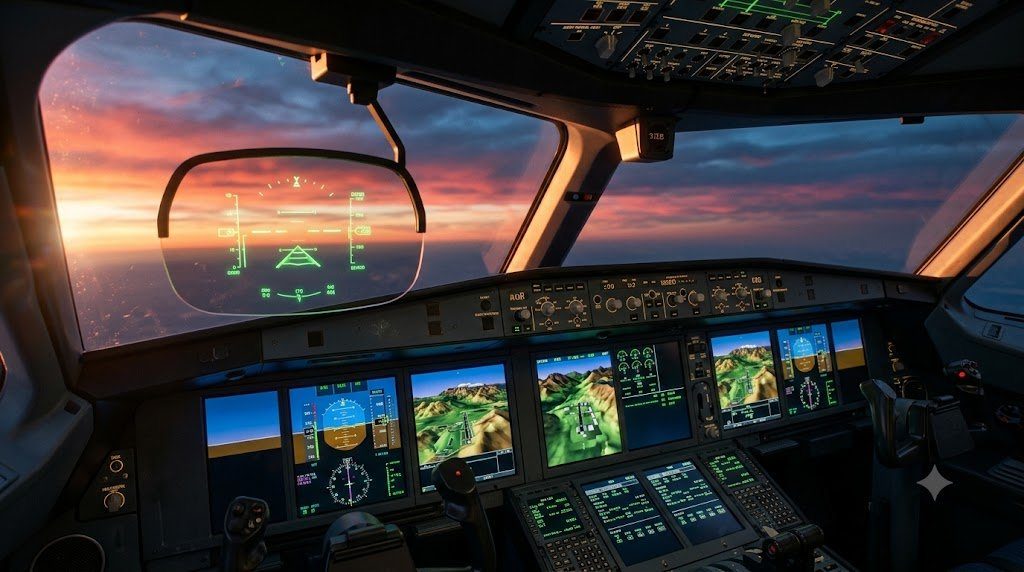
Flight crews therefore monitor flight mode annunciations and other cockpit indications.
They verify that the active and armed modes match their intentions.
This practice helps prevent confusion about which system is controlling a particular aspect of flight.
Automation can reduce routine workload, but misunderstanding automation can create new risks.
Good flight management requires pilots to remain aware of the aircraft’s actual behavior.
What Happens If Autopilot Disconnects Unexpectedly?
Autopilot may disconnect because of a system fault, an operating limit, or an intentional pilot input.
Many aircraft provide visual or audible alerts when autopilot disengages.
The crew must recognize the change and maintain appropriate aircraft control.
Depending on the situation, pilots may continue manually, troubleshoot the system, or reengage suitable automation when permitted.
The correct response depends on aircraft-specific procedures and the nature of the problem.
Commercial pilots train for manual flight and automation-related abnormalities.
This training is important because autopilot availability cannot be assumed under every condition.
Why Autopilot Does Not Replace Pilots
Autopilot is designed to execute selected flight-control tasks.
It does not independently assume all the responsibilities involved in operating an aircraft.
Pilots evaluate weather, aircraft performance, fuel requirements, air traffic instructions, system status, and operational risks.
They also manage unexpected situations that may not fit routine automation behavior.
Flight crews must decide when automation is useful and when another approach is appropriate.
They remain responsible for monitoring the aircraft and ensuring that flight guidance matches the intended operation.
In this sense, autopilot changes how pilots perform their work rather than eliminating the need for pilots.
Autopilot in Small Aircraft vs. Commercial Airliners
Autopilot capabilities vary widely across aviation.
Some light aircraft use relatively simple systems that maintain heading and altitude.
More advanced general aviation aircraft may have integrated navigation tracking, approach guidance, and additional safety functions.
Commercial airliners typically use more complex automatic flight-control systems integrated with flight management and aircraft monitoring systems.
These may support sophisticated lateral and vertical guidance, automatic thrust control, and certified automatic landing functions.
However, more automation also requires careful training and system understanding.
The central principle remains the same: the system controls selected flight parameters while pilots supervise the overall operation.
Frequently Asked Questions
Does autopilot fly the entire airplane?
Autopilot controls selected aspects of the aircraft’s flight path. Pilots remain responsible for supervising and managing the flight.
Can autopilot take off automatically?
Conventional commercial airliner operations generally use manual pilot control for takeoff, with autopilot engaged later when permitted.
Can an airplane land itself?
Some aircraft have certified autoland systems that can perform automatic landings under specific conditions while pilots monitor the operation.
Does autopilot control engine power?
Autopilot primarily controls the flight path. Separate autothrottle or autothrust systems may control engine thrust.
Can pilots disconnect autopilot?
Yes. Pilots can disengage autopilot using approved controls and procedures.
Does autopilot work in bad weather?
Autopilot can operate in many weather conditions, but its use depends on aircraft limitations, system capabilities, and approved procedures.
Why do pilots still need manual flying skills?
Manual flying skills remain important for routine operations, system failures, abnormal conditions, and situations where automation is unavailable or unsuitable.
Final Thoughts
Autopilot is one of the most important developments in modern aviation.
It allows aircraft to maintain selected headings, altitudes, and navigation paths with reduced need for continuous manual control inputs.
Using sensor information and feedback control, the system repeatedly measures aircraft behavior and makes suitable adjustments.
More advanced systems can integrate with flight management computers and support complex approaches or automatic landings.
However, autopilot is not an independent replacement for the flight crew.
Pilots select operating modes, monitor aircraft performance, manage changing conditions, and take manual control when necessary.
They must also understand the limitations of the automation they use.
The relationship between pilots and autopilot is therefore a partnership between human judgment and automatic control.
Autopilot handles many repetitive flight-control tasks, allowing pilots to devote attention to navigation, system management, communication, and overall flight safety.
That combination helps explain why modern aviation relies so heavily on automation while continuing to place trained pilots at the center of flight operations.