How Autopilot Works What It Controls and When Pilots Take Over

FLIGHT DECK SYSTEMS · AVIATION TECHNOLOGY Who Is Really Flying When Autopilot Is On? Explore how modern aircraft maintain their course, altitude, and flight path—and why pilots remain essential even when automation is controlling the airplane. FLIGHT CONTROL AUTOMATION PILOT OVERSIGHT During a long commercial flight, passengers may imagine that the pilots spend hours manually … Read more

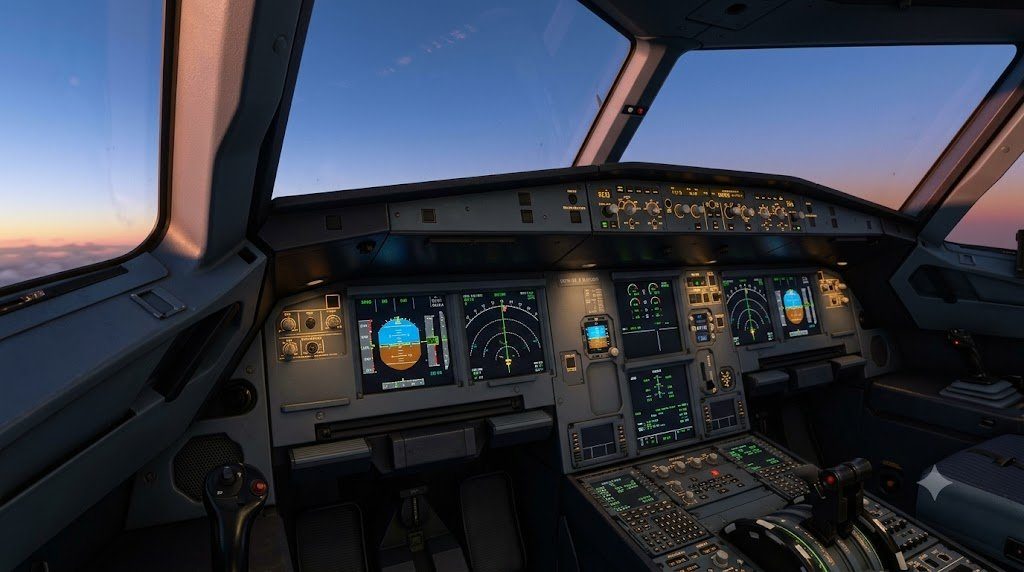
Autopilot Flight Guidance: Flight Management Systems, Kalman Navigation and Category IIIb Autoland

In the contemporary aviation ecosystem, modern transport category aircraft navigate global airway networks, optimize fuel-burn climb profiles, execute Required Navigation Performance (RNP) approaches through mountainous terrain, and land in zero-visibility fog with superhuman precision. This extraordinary operational capability is executed by the integrated Flight Guidance System (FGS)—comprising the Flight Management System (FMS), multi-sensor Kalman Filter … Read more

Environmental Control Systems: Engine Bleed Air, Air Cycle Refrigeration Machines and Ozone Catalysis

Cruising at 39,000 feet (11,800 meters) in the upper troposphere, a commercial jetliner operates in an environment profoundly hostile to human life: outside atmospheric pressure is a near-vacuum 19 to 24 kPa (compared to 101.3 kPa at sea level), ambient air temperature plunges to -56.5°C (-70°F), atmospheric oxygen partial pressure is insufficient to maintain consciousness, … Read more

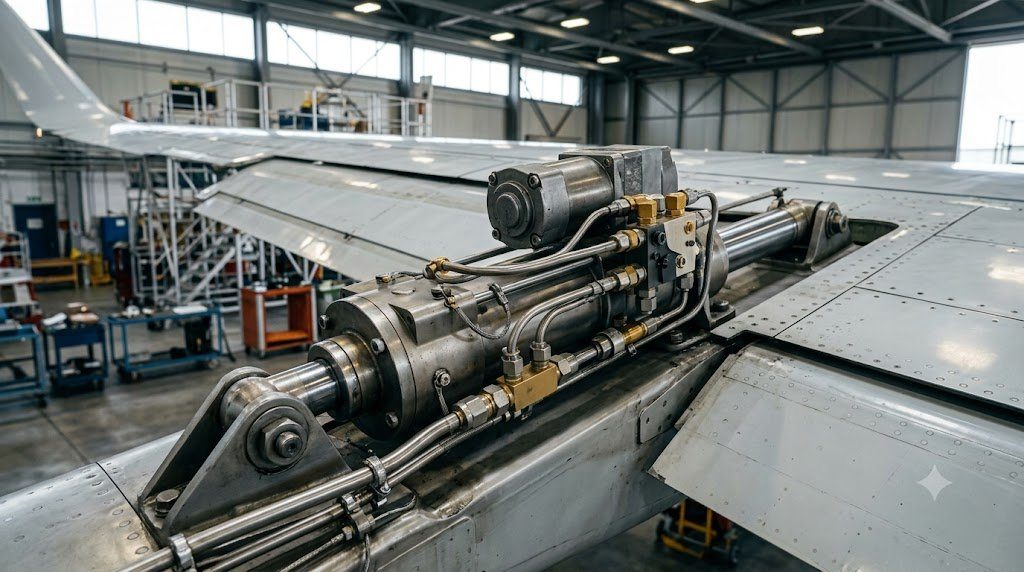
Aircraft Hydraulic Power: 3,000 vs. 5,000 PSI Systems, Electro-Hydrostatic Actuators and Fluid Degradation

Deflecting primary flight control surfaces (ailerons, elevators, rudders) and deploying heavy landing gear assemblies on commercial transport airliners cruising at transonic speeds demands extraordinary mechanical power. Under aerodynamic dynamic pressures ($q = \frac{1}{2} \rho v^2$) exceeding 15 to 25 kPa, aerodynamic hinge moments acting on an elevator can easily exceed 40,000 to 70,000 Newton-meters. Modern … Read more

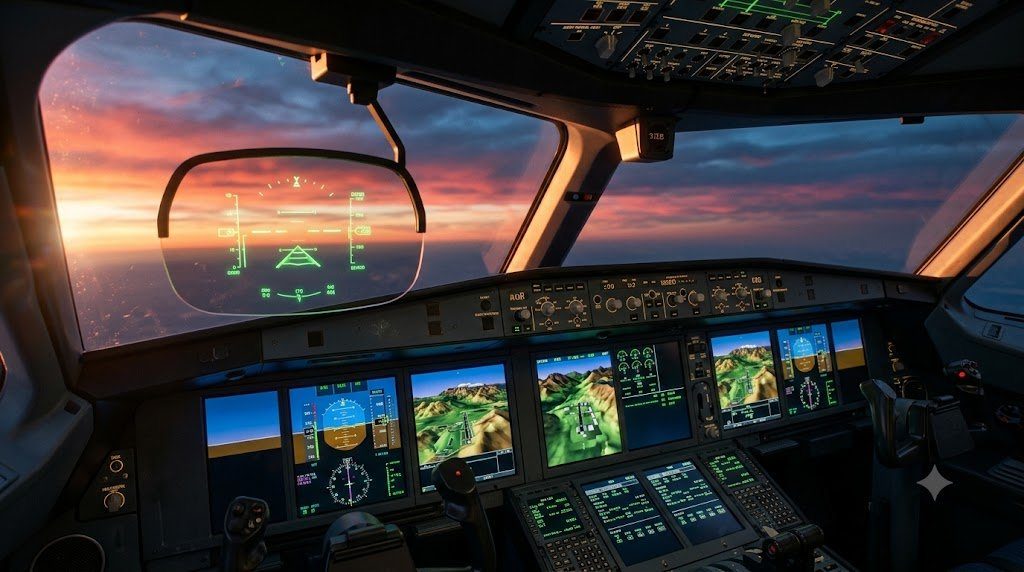
Fly-by-Wire Flight Control Laws: C* Stability Augmentation, Envelope Protection and Triple Redundancy

The transition from mechanical flight control cables, pulleys, and pushrods to Fly-by-Wire (FBW) flight control architectures represents one of the most profound evolutionary milestones in civil transport and military aviation. Pioneered in commercial transport by the Airbus A320 and Boeing 777 and advanced in modern widebody aircraft (A350, B787), fly-by-wire replaces heavy hydromechanical control linkages … Read more