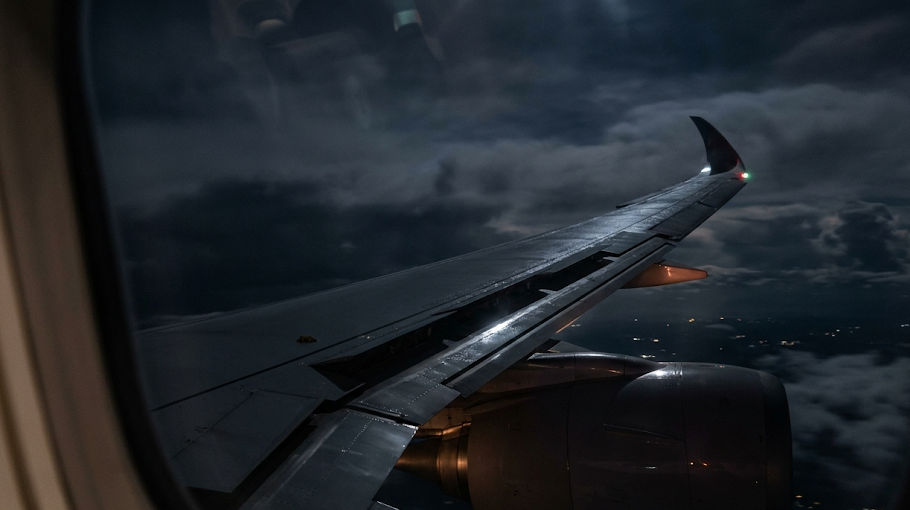
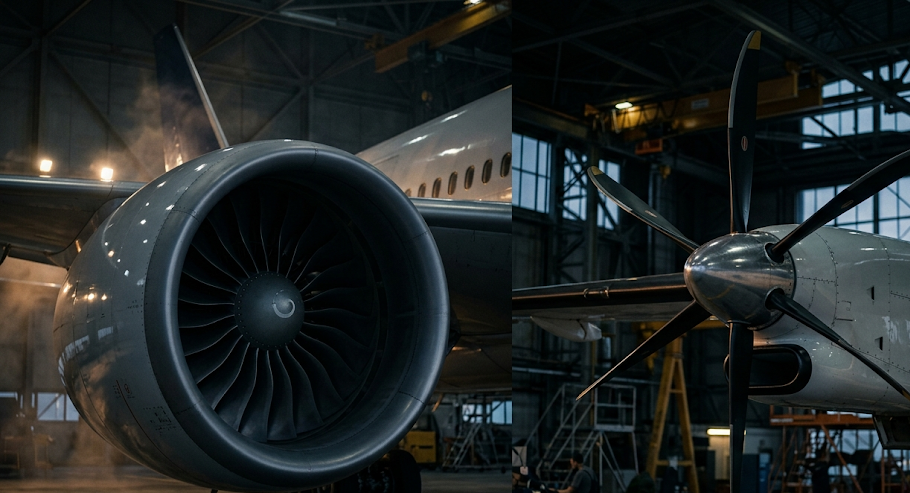
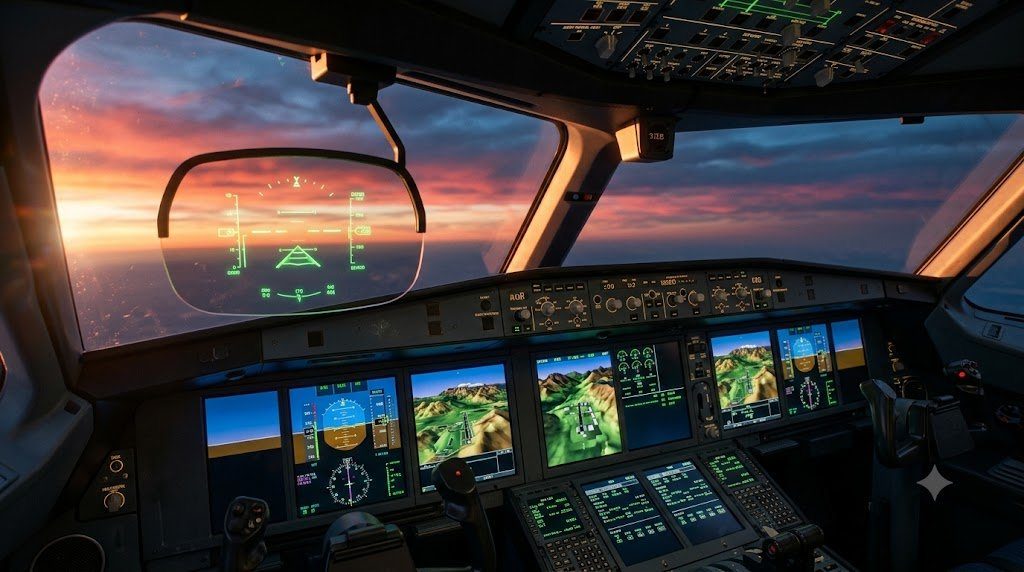
Cruising at 39,000 feet (11,800 meters) in the upper troposphere, a commercial jetliner operates in an environment profoundly hostile to human life: outside atmospheric pressure is a near-vacuum 19 to 24 kPa (compared to 101.3 kPa at sea level), ambient air temperature plunges to -56.5°C (-70°F), atmospheric oxygen partial pressure is insufficient to maintain consciousness, and ambient ozone concentrations are toxic. Transforming this thin, freezing environment into a comfortable, shirtsleeve cabin environment pressurized to a density altitude equivalent of 6,000 to 8,000 feet is the complex domain of the Environmental Control System (ECS).
Airliner cabin pressurization is fundamentally an aerodynamic mass balance problem: high-pressure air is continuously pumped into the cabin by engine bleed air packs or electric compressors, while an electronically controlled Cabin Outflow Valve at the rear pressure bulkhead meters exhaust air overboard. By throttling the outflow valve, the Digital Cabin Pressure Controller (DCPC) maintains cabin pressure differential ($\Delta P \approx 55 \text{ to } 65 \text{ kPa}$ / 8.0 to 9.4 psi) within structural fuselage stress limits.
Engine Bleed Air Conditioning: Intermediate vs. High-Stage Ports
In traditional pneumatic aircraft (Airbus A320, A350, Boeing 737, 777), the primary source of fresh cabin air is Engine Bleed Air extracted from compressor stages of the propulsion turbofans:
- Intermediate-Pressure (IP) Port: Supplies air during high-power takeoff and high-altitude cruise when compressor core pressures are naturally elevated, minimizing thermodynamic engine work penalties.
- High-Pressure (HP) Port: Automatically engaged via pneumatic switching valves during low-power descent and ground idle when IP port pressure is insufficient.
Raw bleed air exits the compressor at temperatures exceeding 200°C to 450°C and pressures up to 3 to 5 bar. Before entering passenger compartments, it passes through a Pre-Cooler Heat Exchanger situated in the engine pylon, utilizing cold fan bypass air to drop bleed air temperature to a manageable 200°C.
The Air Cycle Machine (ACM): The Bootstrap Reverse Brayton Cycle
To cool 200°C bleed air down to freezing cabin supply temperatures (0°C to 15°C), aircraft utilize a specialized thermodynamic refrigerator: the Air Cycle Machine (ACM / Packs) operating on the Reverse Brayton Air Refrigeration Cycle.
Unlike domestic refrigerators that circulate Freon or R-134a, an ACM utilizes air itself as the working refrigerant across four distinct aerodynamic stages:
- Primary Heat Exchanger: Hot bleed air passes through an aluminum plate-fin heat exchanger cooled by ram air entering via an external wing-root scoop.
- Centrifugal Compressor: The pre-cooled air is compressed to higher pressure and temperature by the ACM compressor wheel, which extracts mechanical work from the turbine wheel.
- Secondary Heat Exchanger: Compressing the air raises its temperature, allowing a second ram air heat exchanger to reject substantial additional thermal energy into the ambient airstream.
- Expansion Turbine: The air expands through a high-speed radial expansion turbine spinning on air foil bearings at speeds exceeding 40,000 to 70,000 RPM. The turbine extracts enthalpy work from the air ($W = \dot{m} C_p \Delta T$), causing air temperature to plummet instantaneously to -5°C to +5°C as it exits into the cabin water separator.
| ECS Architectural Topology | Air Extraction Source | Refrigeration Cycle Method | Fuel Burn Efficiency Penalty | Production Aircraft |
|---|---|---|---|---|
| Pneumatic 3-Wheel Bootstrap ACM | HPC Engine Bleed Air (IP/HP) | Reverse Brayton (Comp/Turb/Fan) | High (3% – 5% Engine Thrust Loss) | Airbus A320 / A330, Boeing 737 / 777 |
| Pneumatic 4-Wheel Condensing ACM | High-Pressure Bleed Air | Dual Turbine Air Cycle + Reheater | Moderate (Advanced Air Cycle) | Airbus A380, A350 |
| Bleedless Electric Architecture | External Clean Air Scoops (Zero Bleed) | Dual 100kW Electric Motor Compressors | Ultra-Low (Reclaims 2% – 3% Fuel) | Boeing 787 Dreamliner |
| Vapor Cycle Cooling (VCS) | Closed-Loop Refrigerant (R-134a) | Vapor-Compression Closed Cycle | Moderate (High Electrical Load) | Business Jets & Regional Aircraft |
Bleedless Architecture: The Boeing 787 Electric Revolution
A revolutionary departure from traditional pneumatics is the Bleedless Architecture pioneered on the Boeing 787 Dreamliner. Extracting high-pressure bleed air from jet engines carries severe thermodynamic throttling penalties. The 787 completely eliminates engine bleed air ducts.
Instead, fresh outside air is ingested through dedicated under-fuselage scoops and pressurized by four 100-Kilowatt High-Speed Electric Compressors powered by 230V AC starter-generators. Eliminating pneumatic ductwork shaves weight, eliminates bleed air manifold burst hazards, and cuts aircraft cruise fuel burn by up to 2% to 3%.
Catalytic Ozone Converters and HEPA Air Recirculation Filtration
At high cruising altitudes and polar flight routes, ambient atmospheric ozone ($O_3$) concentrations exceed 0.25 parts per million (ppm), inducing severe respiratory irritation. Bleed air passes through Catalytic Ozone Converters containing noble metals (platinum and palladium) that catalyze ozone dissociation ($2 O_3 \rightarrow 3 O_2$) with >95% efficiency.
Inside the cabin, approximately 50% of the air is recirculated through hospital-grade High-Efficiency Particulate Air (HEPA) Filters. Trapping 99.97% of airborne microbes, viruses, and particulates down to 0.3 micrometers, cabin air undergoes a complete fresh-air volumetric renewal every two to three minutes.
Thermodynamic Psychrometrics of Bootstrap Air Cycle Machines and Cabin Ozone Dissociation
The Environmental Control System (ECS) maintains a habitable, thermally regulated, and pressurized atmospheric environment for passengers and flight crew while cruising at altitudes between 35,000 and 43,000 feet, where ambient atmospheric pressure drops below 18 kPa ($0.18 \text{ bar}$) and outside air temperatures plummet to $-56.5^\circ\text{C}$. In conventional bleed-air ECS architectures, high-pressure, high-temperature air is extracted from engine compressor stages ($T_{bleed} \approx 200 – 250^\circ\text{C}, P_{bleed} \approx 200 – 350 \text{ kPa}$) and routed through multi-stage Bootstrap Air Cycle Machines (ACM) operating on the reverse Brayton refrigeration cycle.
The extracted bleed air first passes through a primary air-to-air heat exchanger cooled by external ambient ram air, enters the ACM centrifugal compressor where it is re-compressed to higher pressure, passes through a secondary ram air heat exchanger to reject heat of compression, and finally expands across a high-speed centrifugal cooling turbine mounted on a shared rotating shaft:
Tturbine,exit = Tinlet · [ 1 – ηt · (1 – (Pcabin / Pinlet)(γ-1)/γ) ]
The rapid isentropic expansion across the turbine extracts shaft work to drive the cycle compressor, dropping air temperature precipitously down to $-5^\circ\text{C}$ to $+2^\circ\text{C}$. High-pressure water separators coalesce and remove supersaturated moisture before the conditioned air is mixed with recirculated cabin air and ducted into the passenger cabin.
At cruise altitudes within the lower stratosphere, atmospheric ozone ($O_3$) concentrations reach dangerous levels (0.5 to 2.5 ppm), well above safe FAA exposure limits (0.1 ppm time-weighted average). Aircraft ECS lines incorporate high-temperature catalytic converters containing noble metals (Palladium and Platinum deposited on ceramic honeycomb substrates). As hot bleed air traverses the core, the catalyst accelerates the exothermic dissociation reaction: $2 O_3 \rightarrow 3 O_2$, reducing ozone concentration by over 95% prior to cabin delivery.
Cabin Differential Pressure Regulation and Outflow Valve Electro-Pneumatics
Cabin pressurization is maintained by modulating the mass rate of air exiting the fuselage via active outflow valves installed near the tail cone. Commercial airframes maintain a maximum differential pressure ($\Delta P_{max}$) between 8.2 and 9.4 psi (56.5 to 64.8 kPa), holding internal cabin pressure equivalent to an altitude of 6,000 to 8,000 feet. Dual redundant digital cabin pressure controllers modulate brushless actuator motors to smooth cabin climb and descent rates below 500 feet per minute (2.5 m/s), preventing passenger barotrauma while protecting structural fuselage fatigue life.
Cabin Atmosphere Contamination Teardowns: Engine Wet-Seal Pyrolysis and Organophosphate Fume Events
Because conventional bleed-air ECS designs extract cabin air directly from high-pressure engine compressor stages, any mechanical failure of engine bearing carbon seals can introduce synthetic lubricating oil into the air conditioning distribution ducting. Aviation gas turbine oils utilize synthetic polyol ester base stocks formulated with organophosphate anti-wear additives—predominantly Tricresyl Phosphate (TCP). When bearing oil leaks into $450^\circ ext{C}$ compressor bleed air, the fluid pyrolyzes into carbon monoxide, acrolein, and neurotoxic organophosphate fumes (a phenomenon known as a ‘Fume Event’).
The aerospace industry has deployed extensive engineering countermeasures to detect and eradicate bleed-air contamination. Modern bleed air systems incorporate catalytic carbon adsorption filters, real-time metal-oxide semiconductor hydrocarbon sensors, and automated bleed-valve isolation logic. If an abnormal volatile organic compound (VOC) signature is detected in an engine bleed line, the ECS controller closes the corresponding Engine Bleed Air Valve (PRSOV) within 2 seconds, transferring full pressurization supply to the opposite healthy engine or APU.
To permanently eliminate cabin fume event risks and improve engine fuel efficiency, Boeing engineered the 787 Dreamliner with a revolutionary ‘Bleedless Architecture’. Instead of extracting compressed air from the engines, the 787 draws fresh ambient air through dedicated belly scoops. Four high-speed electric Cabin Air Compressors (CAC)—each driven by an ultra-compact 100 kW variable-frequency electric motor operating at 40,000 RPM—pressurize and condition fresh air independently. This eliminates engine bleed ducting, reduces aircraft weight, and saves 2% to 3% in overall cruise fuel burn.
Depressurization Dynamics and Passenger Oxygen Chemical Generator Chemistry
If an airframe suffers rapid cabin decompression at 40,000 feet, Time of Useful Consciousness (TUC) drops to just 15 to 30 seconds. Pressure altitude barometric sensors automatically trigger emergency passenger oxygen mask deployment when cabin altitude exceeds 14,000 feet. Overhead passenger service units (PSU) utilize sodium chlorate chemical oxygen candles: firing a mechanical percussion primer initiates an exothermic chemical reaction ($2 NaClO_3 \rightarrow 2 NaCl + 3 O_2$) that produces pure breathable medical oxygen for 15 to 22 minutes, providing ample time for pilots to execute an emergency descent to safe breathable altitude (10,000 feet).
Air Cycle Machine Foil Air Bearing Maintenance and High-Efficiency Particulate Air (HEPA) Filtration
Modern high-speed Air Cycle Machines (ACM) operate at extreme rotational speeds ranging from 40,000 to over 80,000 RPM. At these velocities, conventional oil-lubricated ball bearings are unusable: engine oil would contaminate conditioned cabin air, and mechanical bearing friction would cause rapid thermal seizure. Consequently, aerospace ACMs utilize advanced Foil Air Bearings (compliant hydrodynamic gas bearings). A smooth top foil and corrugated bump foil surround the rotating shaft. As the turbine shaft spins up, aerodynamic air viscosity drags ambient air into the converging wedge, generating a hydrodynamic pressurized air cushion that completely lifts the shaft away from the foil surface with zero physical contact or lubricant required.
To protect passenger health and maintain pristine cabin air quality, modern transport aircraft recirculate approximately 50% of cabin air, passing it through commercial High-Efficiency Particulate Air (HEPA) filter banks. Certified aerospace HEPA filters trap at least 99.97% of airborne particulate matter down to 0.3 microns in diameter—including respiratory droplets, airborne bacteria, and viral capsids. Routine maintenance schedules mandate HEPA filter element replacement at 1,200 to 2,400 flight hour intervals, accompanied by differential pressure sensor verifications to prevent blower motor overloads.
To eliminate catastrophic cabin over-pressurization risks that could burst fuselage structures, aircraft incorporate autonomous spring-loaded mechanical Positive Pressure Relief Valves (PPRV) and Negative Pressure Relief Valves (NPRV) completely independent of digital outflow valves. Maintenance technicians test PPRVs annually using pneumatic test sets, verifying that valves snap open automatically if differential pressure reaches $9.6 \pm 0.1 \text{ psi}$, and NPRVs open if external pressure exceeds cabin pressure during rapid emergency dives.
Vapor Cycle Refrigeration Systems (VCRS) and Supersonic Passenger Cabin Conditioning
While Bootstrap Air Cycle Machines dominate commercial subsonic transport airliners, emerging next-generation aerospace vehicles—encompassing commercial supersonic passenger transports (e.g., Boom Supersonic Overture) and high-density electric vertical takeoff and landing (eVTOL) air taxis—are driving the adoption of Vapor Cycle Refrigeration Systems (VCRS) utilizing low-GWP (Global Warming Potential) eco-friendly hydrofluoroolefin (HFO) refrigerants (such as R-1234yf and R-1233zd(E)).
In commercial supersonic flight regimes cruising at Mach 1.7 to 2.2, aerodynamic skin friction heating raises aircraft skin temperatures above $100^\circ ext{C}$ ($212^\circ ext{F}$). External ambient ram air is far too hot to act as a direct heat sink for conventional air cycle cooling. VCRS architectures utilize closed-loop, hermetically sealed refrigerant vapor compression loops driven by high-speed variable-frequency electric centrifugal compressors. Heat extracted from the passenger cabin is pumped through refrigerant condensers that reject thermal energy directly into the aircraft’s high-capacity fuel tanks (fuel thermal sink management), maintaining an ultra-quiet, comfortable cabin environment.
Recognizing the physiological health benefits of higher cabin pressurization, modern composite widebody airframes (Boeing 787 and Airbus A350) have redefined cabin altitude standards. Because carbon composite fuselage structures do not suffer from cyclic metal fatigue corrosion, maximum cabin altitude is maintained at 6,000 feet (1,828 m) during cruise—rather than the legacy 8,000 feet (2,438 m) of aluminum aircraft—while relative humidity is increased from 5% up to 16%, virtually eliminating passenger fatigue, dry eyes, and jet lag.
Integrated Aircraft Systems Engineering: Fly-By-Wire, High-Pressure Hydraulics and Pneumatics
The design, certification, and airworthiness operation of modern transport category aircraft depend upon the seamless physical and logical integration of Flight Control Systems, Hydraulic Power Distribution, Environmental Control Systems, and Automated Flight Guidance. These mission-critical architectures function as an interconnected physiological nervous system within the airframe, transforming pilot intent and sensor telemetry into precise aerodynamic control forces.
Modern aircraft systems architecture is defined by three fundamental design tenets:
- Dissimilar Multi-Channel Redundancy: Eliminating single-point and common-mode failure vulnerabilities through quad-redundant flight control computers, dual dissimilar microprocessor architectures, and triple independent 3,000/5,000 psi hydraulic power distribution circuits routed through segregated airframe zones.
- Dynamic Energy Management: Optimizing secondary power extraction from engine cores. The progressive adoption of More-Electric Aircraft (MEA) architectures replaces inefficient engine bleed air with high-voltage 230V AC electric generators and localized Electro-Hydrostatic Actuators (EHA), reducing aircraft empty weight and slashing fuel consumption.
- Envelope Protection and Human Factors Integration: Ensuring flight control laws (such as C* pitch rate and normal load factor demand) establish insurmountable safety boundaries—preventing structural over-g excursions, aerodynamic stalls, and overspeed flutter regardless of pilot stick deflections during high-stress operational upsets.
A commercial airliner cannot execute a successful Category IIIb autoland approach without the coordinated synergy of its flight systems: the FMS calculates the navigation trajectory, the autopilot translates flight path errors into C* control law commands, the FBW computers signal electro-hydraulic servo valves, the 5,000 psi hydraulic circuits deflect primary control surfaces, and the environmental control system maintains cabin differential pressure and thermal comfort. The flawless interoperability of these systems represents the pinnacle of aerospace engineering safety.
System-Level Fault Tolerance, Master Minimum Equipment Lists (MMEL) and Dispatch Reliability
Commercial airline economics depend heavily on on-time departure reliability governed by FAA/EASA certified Master Minimum Equipment Lists (MMEL). The built-in redundancy of modern flight control computers, hydraulic power loops, and cabin air cycle packs enables aircraft to operate safely under designated Category A, B, and C dispatch deferrals—ensuring that transient component faults can be safely addressed during scheduled overnight depot maintenance rather than causing costly terminal gate flight cancellations.